

A lot of great info in this master class, have definitely been using some of these tips on set.
Christopher Roe






A lot of great info in this master class, have definitely been using some of these tips on set.
Christopher Roe
By the time of watching, I was on a difficult shoot. Everything what was said helped me to be better on set.
Tomislav Mihaylov
I have been working my way through it. It's absolutely brilliant!
Fiona Reid
From fluid head to Steadicams to Trinitys to a remote head on a Scorpio. I would definitely recommend.
Iona Tarchila
The knowledge, technically or even how to be present on set, I've been learning a lot.
Emmanuel Garcia
How to behave on the set and how to get work and what to do and what not to do. Which is really important and not just getting into straight-only technical stuff.
Samuel Grasberger
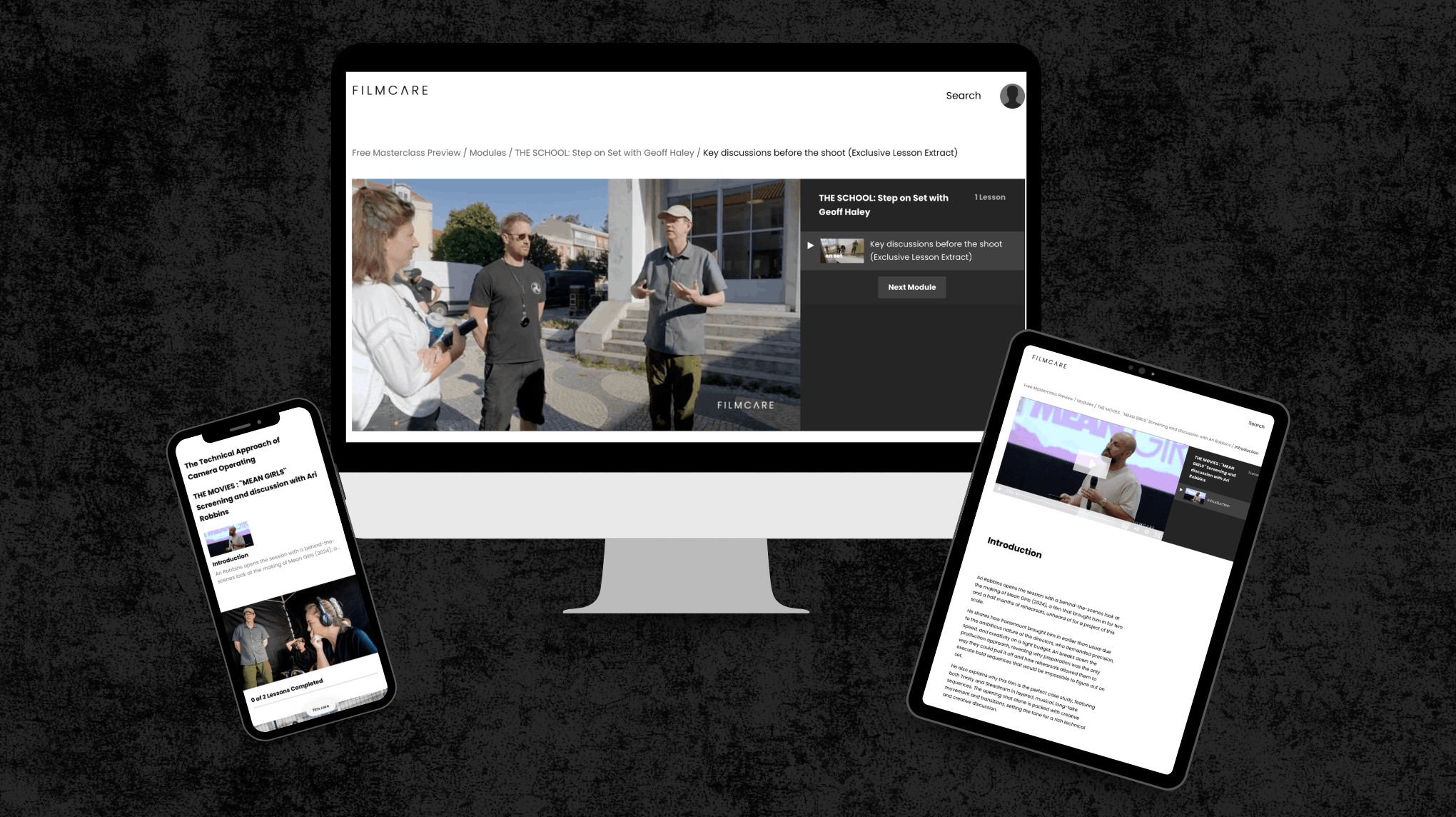
Not sure yet? Start with the free preview. Experience the approach first, decide later.
The Filmcare Framework™
Step inside the Filmcare Masterclass alongside world-class mentors: Geoff Haley, Ari Robbins, Curt Schaller, Fares Corbani, David Procter BSC, Walter Klassen, and director La Sister.
Geoff opens with a powerful lesson: the smallest details are what separate a good operator from a great one. With 30 years and 100+ films, he sets the tone for what this course truly is: not training, but transformation.
This opening lays the foundation: sharpen your instincts, elevate your mindset, and understand what it takes to stand out as an A-Cam Operator.
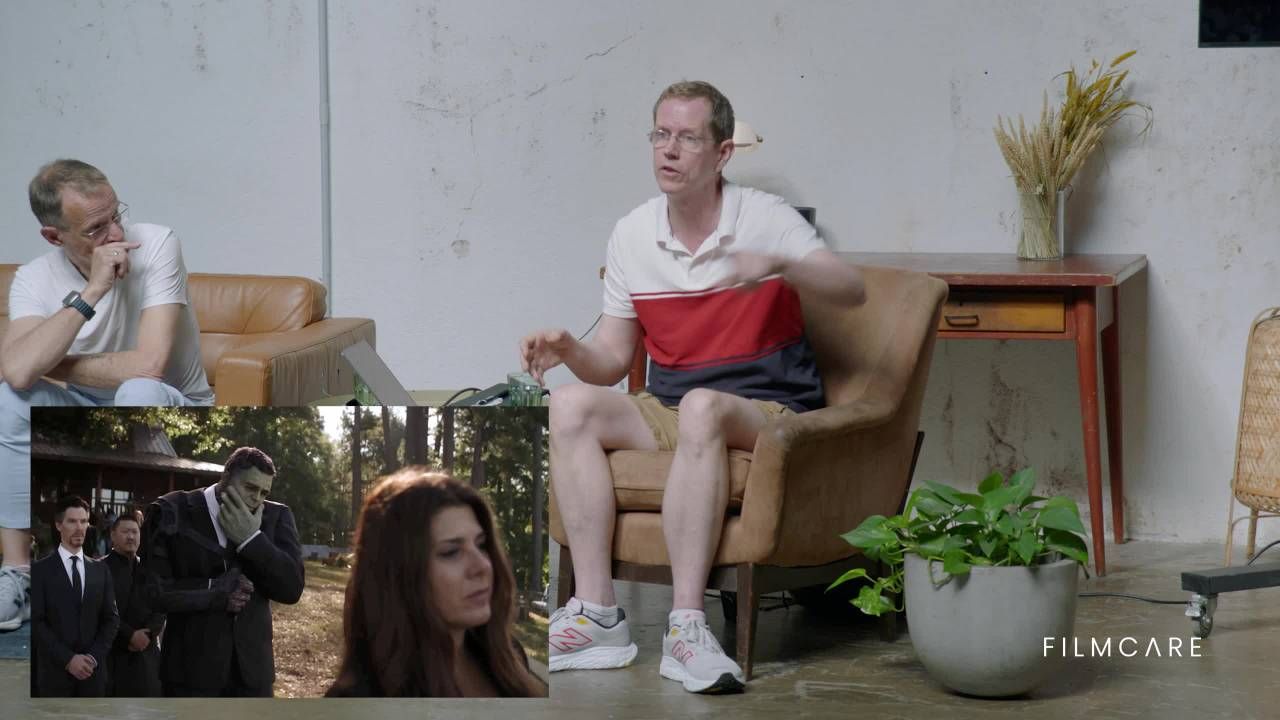
Part 1 - How to Become indispensable as an A Cam Operator with Geoff Haley
What's the real job of an A-Cam Operator? It's not what most people think.
In this powerful opener, Geoff Haley breaks down what truly defines an operator that directors rely on.
With 100+ films behind him, he shares hard-earned lessons and unforgettable case studies from Avengers: Endgame - Marvel Studios and Easy A - Sony Pictures, revealing what it takes to become essential, trusted, and impossible to replace.
This is mindset, not mechanics.
Part 2 - Navigating politics and crew relations
On set, talent isn't enough. Relationships shape careers.
Geoff pulls back the curtain on crew politics, perception, and the invisible hierarchy that determines who gets hired again.
Drawing from his experience as both an operator and director, he reveals how sets truly function under pressure and how to become the calm, trusted presence every director wants behind the camera.
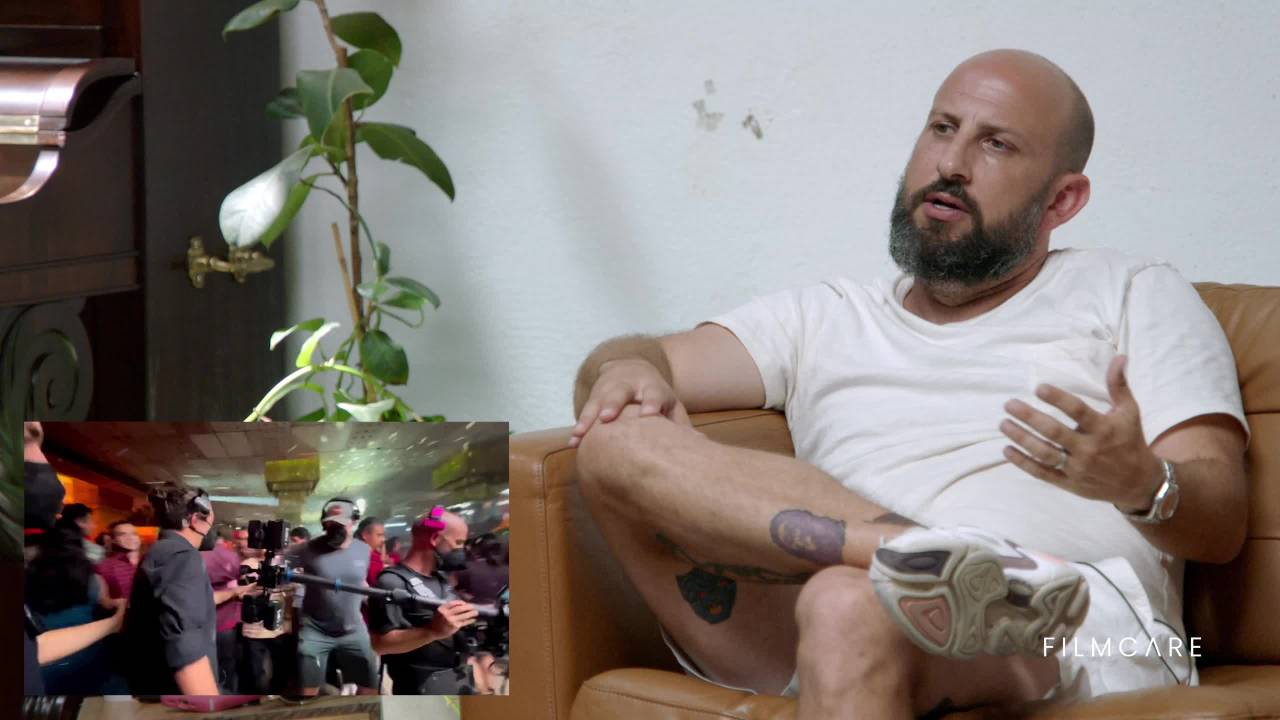
Part 1 - Introduction
Ari Robbins opens with the brutal reality of shooting Bardo, starting on 65mm film with a 171-pound camera, nearly destroying both the rig and himself in the first takes.
From Steadicam to Trinity, gimbals to Technocranes, Ari sets the foundation: knowing your tools isn't just technical… it's survival.
This is about evolving with technology and mastering the operator's expanding toolbox.
Part 2 - Picking the Right Tool for the Perfect Shot
What makes a shot unforgettable? Ari reveals that the answer is never comfort, it's storytelling.
Through powerful examples from Bardo - Netflix and La La Land - Summit Entertainment, he breaks down how every tool choice shapes emotion, rhythm, and impact. From broken rigs to impossible Trinity moves, Ari shares the instinct-driven philosophy behind his signature style.
Where the operator ends and the shot begins - this is the line he lives on.
Part 3 - The Politics of introducing new tools on set
New gear isn't just tech… it's trust.
Ari pulls back the curtain on the hidden tension operators face when introducing unfamiliar tools under pressure. He shares a high-stakes story of a full-speed camera move that left an actor speechless and the negotiation it took to make it happen.
This lesson is about navigating egos, expectations, and the fine line between innovation and disruption.
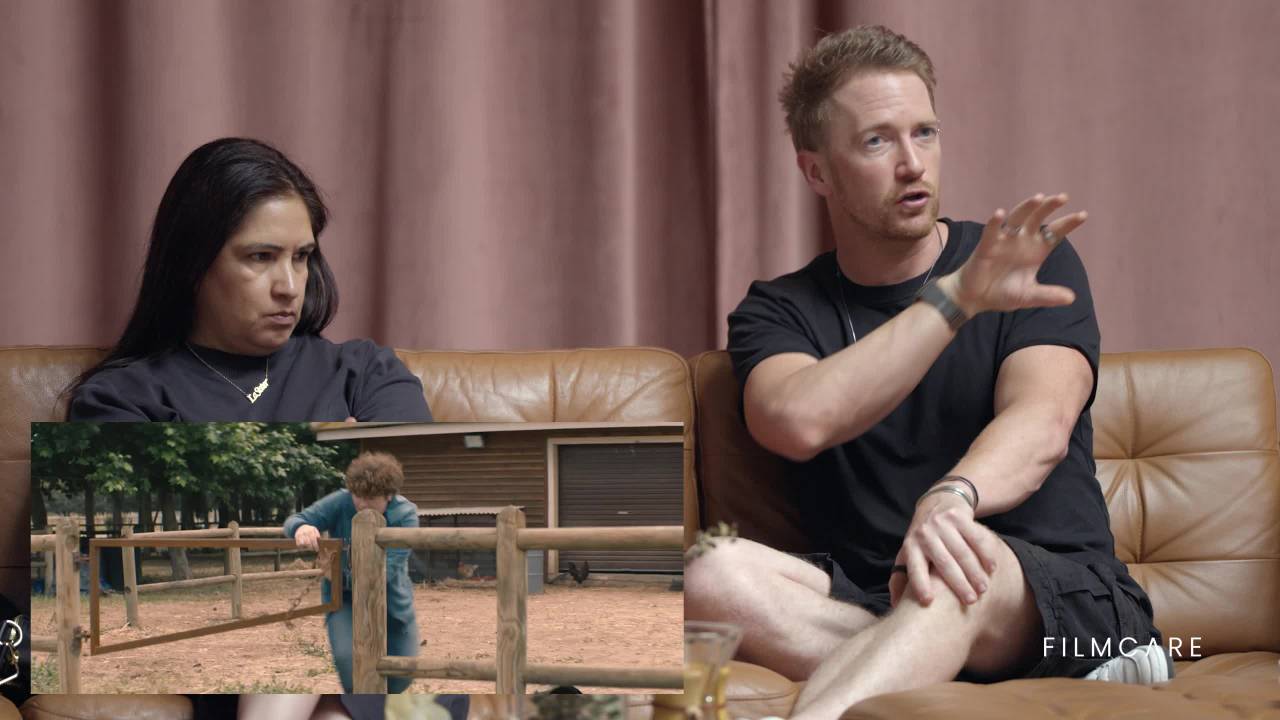
Part 1 - Navigating previs and storyboards
Before cameras roll, great operators get ahead of the chaos.
Geoff Haley breaks down how feature films use storyboards and previs to design movement, rhythm, and energy long before stepping on set, including real examples from Twisters - Universal Pictures / Warner Bros.
He also reveals the behind-the-scenes dynamic between operator, director, DP, and producers, and how trust at the highest level leads to repeat bookings, including his long-running collaborations on films starring Dwayne Johnson.
Learn how to mentally map sequences, anticipate timing, and walk into prep already in control.
Part 2 - Managing crew dynamics
Talent isn't enough if the chemistry is wrong.
David Procter, BSC reveals what top cinematographers truly look for when hiring an A Cam Operator: artistic alignment, visual intuition, and the ability to communicate through references, not technical noise.
Together with Geoff, they unpack early red flags, fast-trust dynamics, and how to "read the room" when joining a feature team under pressure.
This is about people, not gear.
Part 3 - How to manage stress and spot risks
Pressure builds fast on a feature set and how you handle it defines your reputation.
Geoff Haley and Ari Robbins share the real emotional weight of being the operator everyone depends on. David Procter, BSC also brings powerful perspective through examples from Black Beauty - Disney, revealing how stress, timing, and risk management shape the outcome of a day.
You'll learn how resentment spreads through crews, how to stay mentally sharp, and how to avoid becoming the weak link when tensions rise.
This chapter is your armor against burnout, blind spots, and costly mistakes.
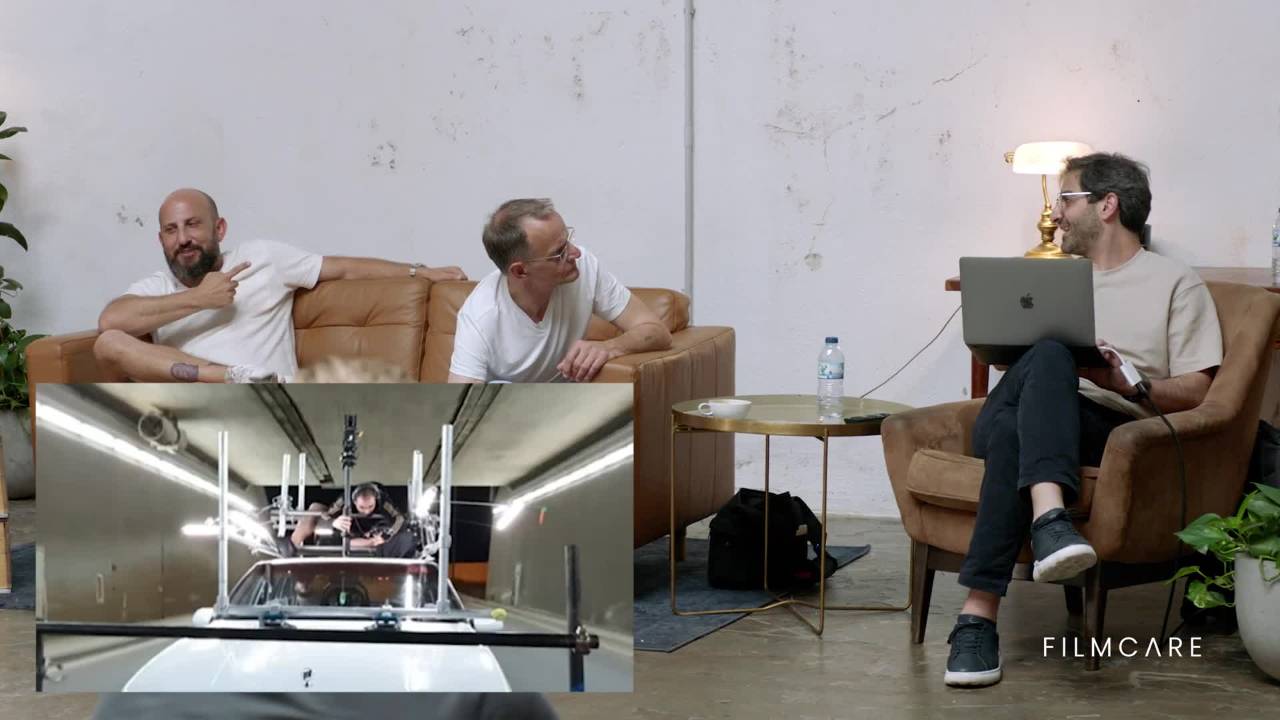
Commercials move fast, but the best ones still feel like cinema.
In this chapter, Fares breaks down major international spots, revealing how feature-level discipline, previs, and precision translate into high-pressure commercial work.
Live editing on set, camera cars, Steadicam, dollies, handheld, and one perfectly executed shot per location, this is commercial operating at the highest level.
Ari Robbins joins the discussion to explore how a cinematic mindset turns rushed coverage into unforgettable storytelling.
This session will change how you approach your next job when time, budget, and pressure are real.
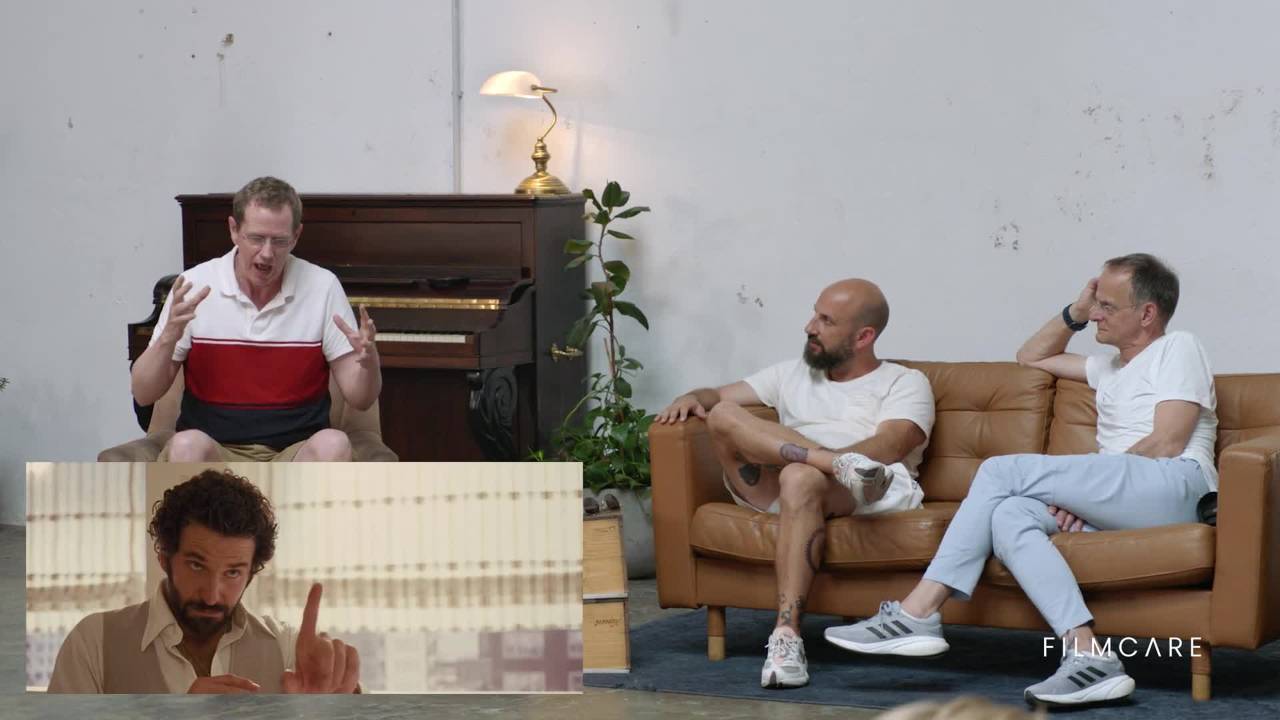
Part 1 - How to handle shooting with the wrong gear
As an operator, you'll often be asked to "just get the shot", even when the setup is wrong.
In this no-nonsense session, the instructors break down how to stay calm, assertive, and professional under pressure: dolly shots forced onto Steadicam, last-minute changes, or gear choices that compromise the result.
This is about protecting the shot, your body, and your reputation, while educating the crew without burning bridges.
Being right isn't enough. How you handle being right defines your longevity.
Part 2 - Tending to the actors's needs
Operating isn't only technical, it's deeply human.
Geoff Haley explores the delicate relationship between operator and actor, sharing powerful examples from films like American Hustle - Columbia Pictures, Annapurna Pictures, where performance and camera precision must coexist under intense pressure.
He also recounts a jaw-dropping moment: a 600mm Steadicam close-up on Christian Bale, held perfectly steady for four full minutes, the kind of shot that demands total control and complete trust.
This chapter reveals how small instincts, respect for performance, and knowing when to push or hold back can earn lifelong trust on set and create unforgettable results on screen.
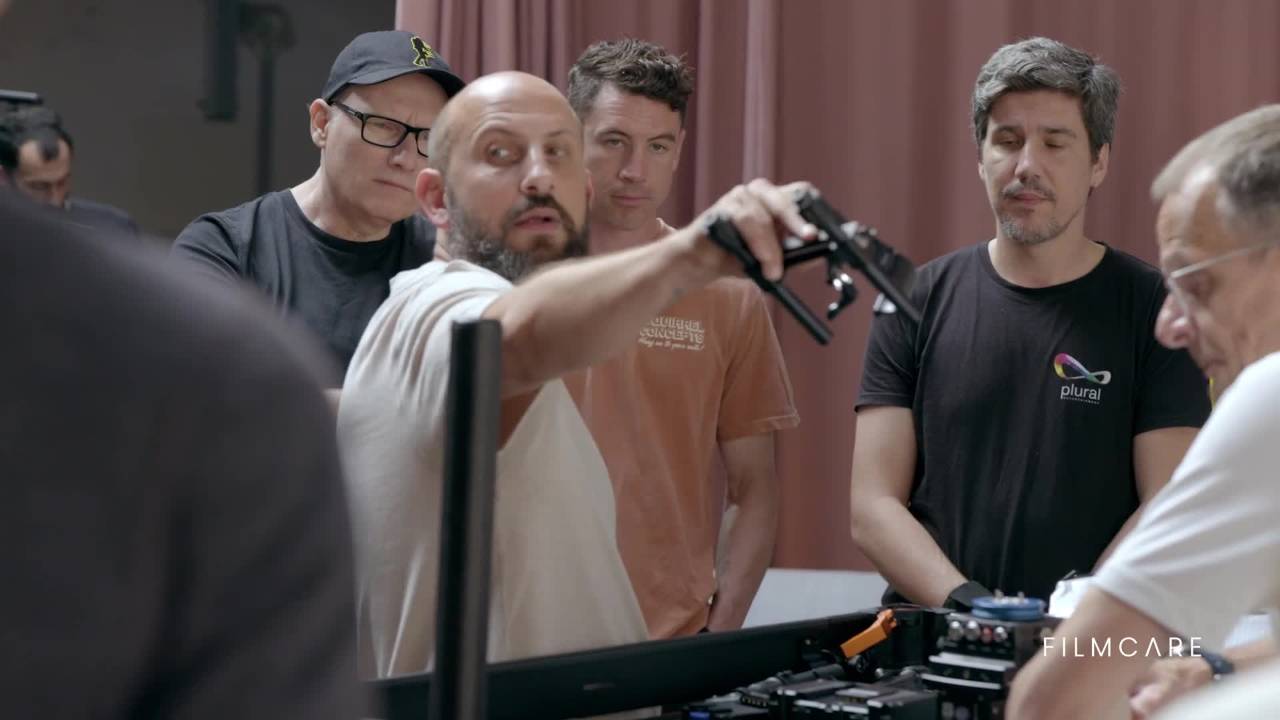
Part 1 - Optimizing the rig setup
The rig should work for you, never against you.
Curt Schaller shares the performance logic behind a truly optimized rig build: intelligent weight distribution, dynamic balance, and why fewer batteries can sometimes deliver better results. Small changes, like rod material or placement, can radically shift how the system behaves.
Geoff, Ari, and Fares add real-world perspective, translating mechanical decisions into on-set advantage.
Part 2 - Power and batteries
This part covers how batteries subtly alter inertia and how power decisions directly affect endurance and stability.
Geoff adds practical insight from working across B-mount and Gold-mount systems in demanding productions.
Part 3 - Bottom stage setup and its impact on inertia
Inertia defines movement.
Battery choice, rod length, monitor position, every bottom-stage decision reshapes stability and responsiveness. Curt demonstrates how to fine-tune distribution, adapt Trinity-style logic, and stay fast with tool-free adjustments.
Part 4 - In-depth info about the post
Curt breaks down internal structure, fine-trim systems, and subtle upgrades that eliminate wobble and increase accuracy. Built through years of evolution and high-end production demands, this knowledge separates casual setups from professional builds.
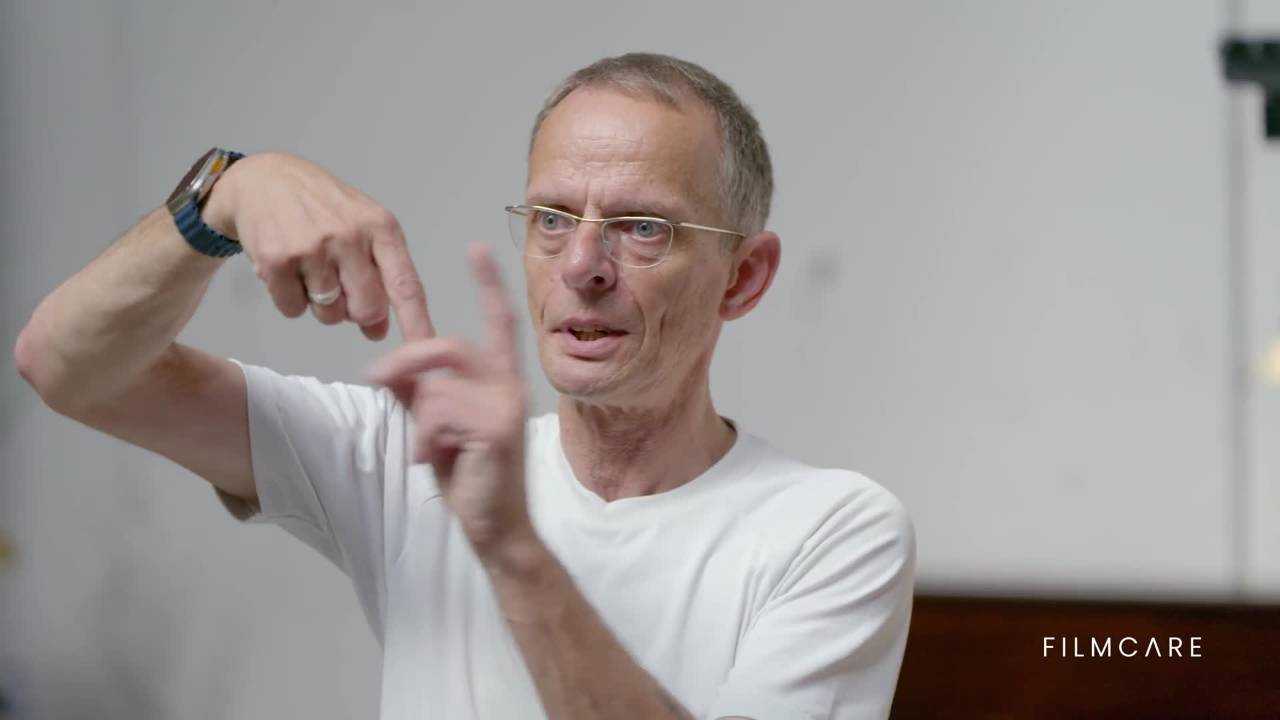
Technical precision goes beyond balance and build.
In this session, Curt Schaller addresses critical cabling mistakes that still happen on high-end productions, and the serious consequences they can carry for modern camera systems and stabilized rigs.
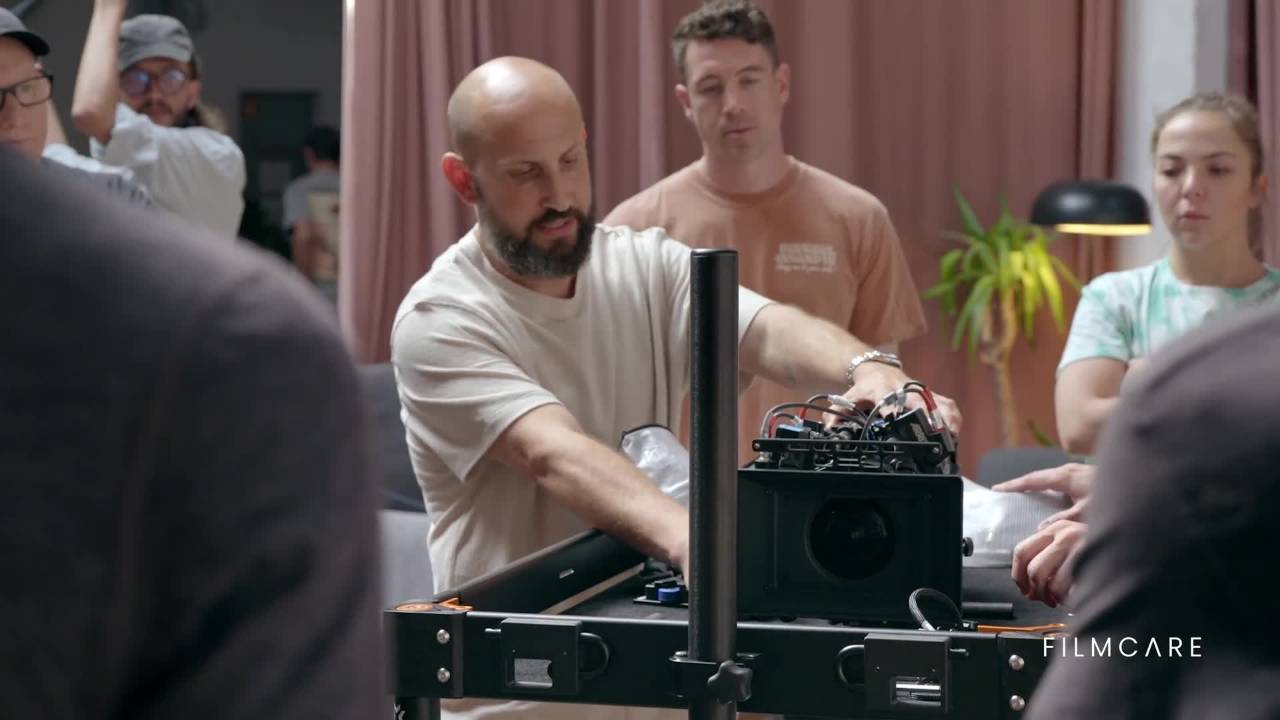
Dynamic balance remains one of the most debated foundations of Steadicam operating.
In this hands-on session, Curt Schaller and Geoff Haley break it down with clarity and precision, demonstrating practical methods used on professional sets to achieve stability efficiently and consistently.
You'll understand how small misalignments affect the entire system, why instability is often mechanical rather than mysterious, and how to approach balance with confidence instead of trial and error.
If your rig has ever felt slightly "off" without a clear reason, this chapter brings structure to what others leave to instinct.
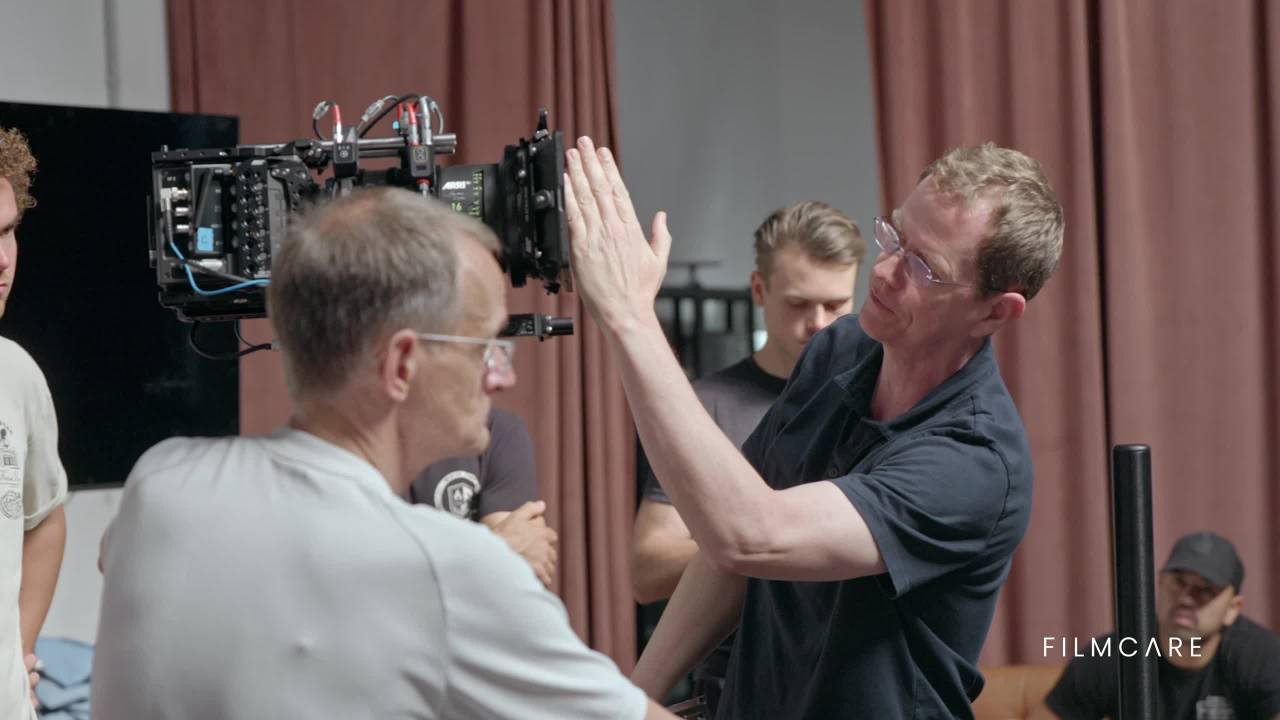
Precision lives in the details.
In this session, Curt Schaller and Geoff Haley address the subtle balance issues that often get mistaken for equipment failure. Through practical demonstrations, they show how small mechanical adjustments can completely transform the behavior of a rig.
Micro-trimming the sled, correcting dynamic weight distribution and restoring bottom-stage symmetry, this chapter reinforces why advanced tools never replace fundamental balance.
A focused session for operators who want their system dialed in, before small imperfections become costly problems.
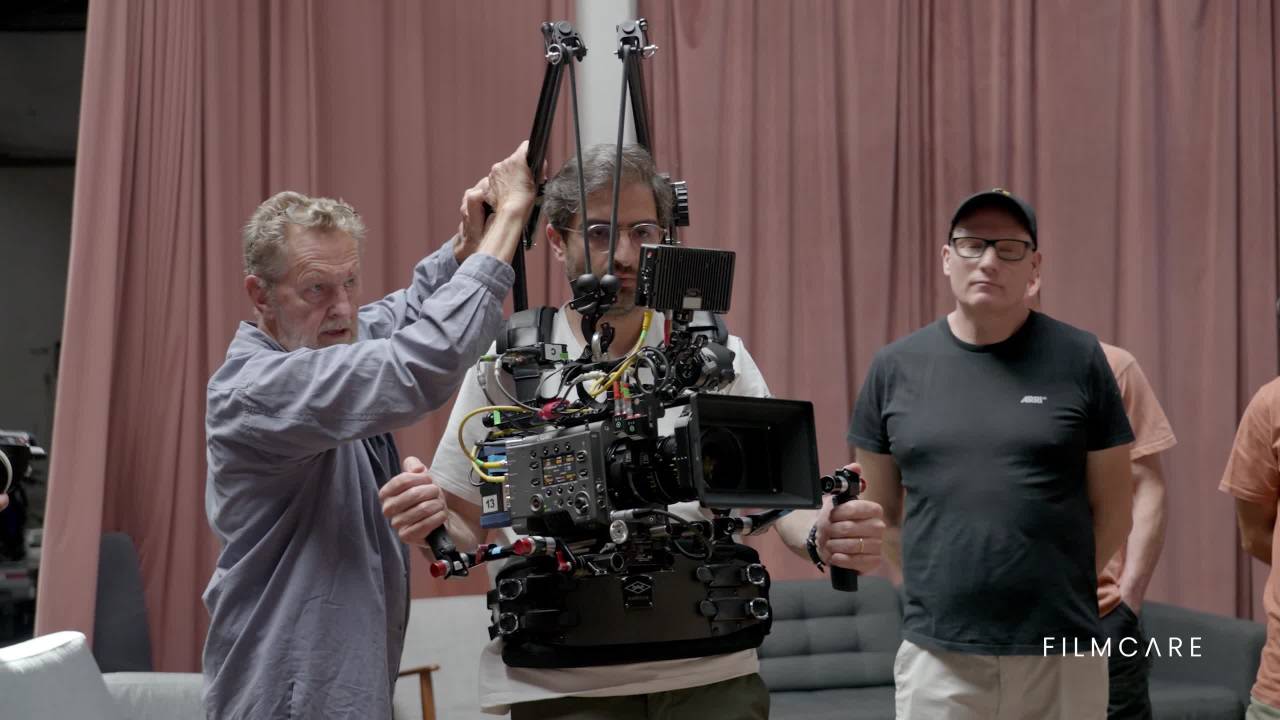
Walter Klassen joins Geoff Haley and the team to explore the philosophy and mechanics behind the Slingshot and Vest. Systems originally designed for gimbal work, later refined by elite operators for controlled handheld performance, with insights drawn from productions like Joker and Avengers.
They examine why certain support systems introduce unwanted resistance and lag under real movement, and how refined setup choices eliminate that disconnect between operator and camera.
This session covers pick points, rig extensions, and balance strategies that allow handheld work to remain intentional, precise, and story-driven.
A technical and practical look at how the right support makes handheld feel richer, easier, and fully integrated within the on-set workflow.

In this session, Geoff Haley, Ari Robbins, and the team reveal their radically different approaches. Geoff avoids sticky mode entirely. Ari relies on it consistently. The contrast opens a deeper discussion about feel, precision, and control.
This chapter isn't about right or wrong, it's about a focused look at how preference, intent, and mechanics intersect in real-world operating.
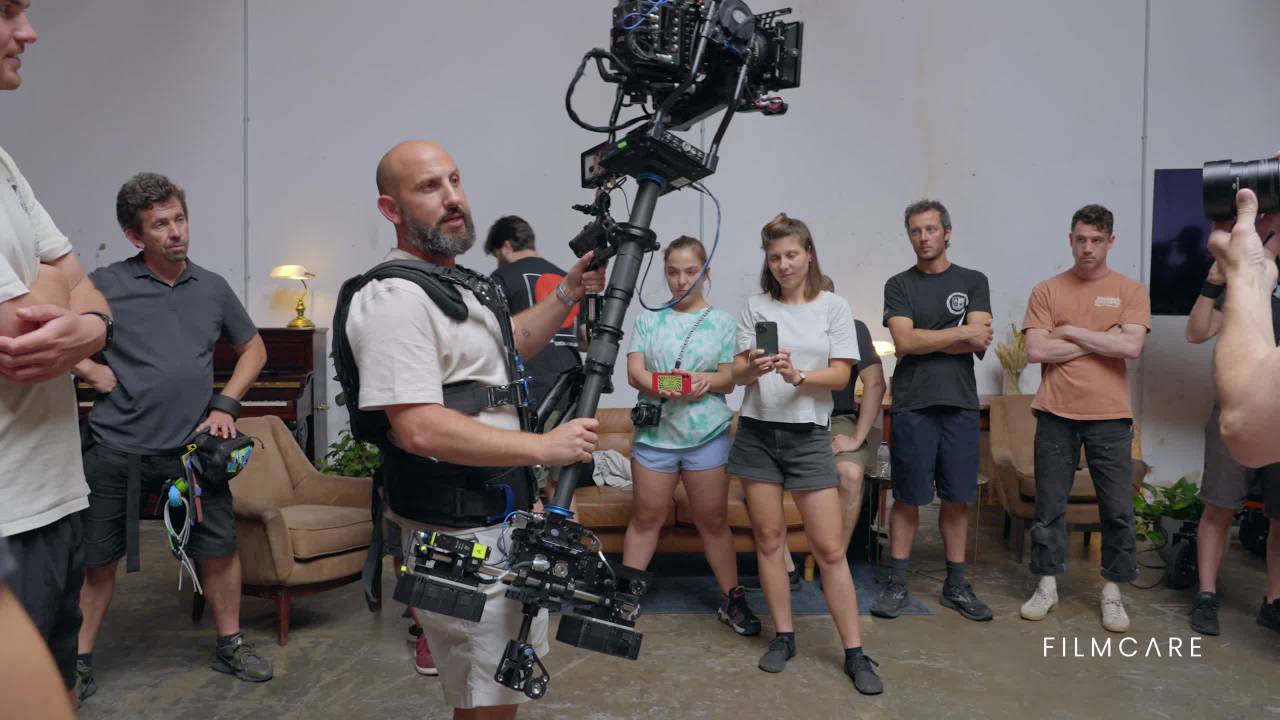
Part 1 - Finalizing the bottom stage on the skater
Curt Schaller calls it "the beast" and this session begins the process of mastering it.
Starting from the bottom stage, Curt breaks down how each operating layer, standard Steadicam, tilt axis, roll... requires a deliberate balance strategy. Trinity remains limited until fully understood and intentionally configured.
This chapter builds the foundation for fast setups, demanding builds, and high-precision movement, depending on what the production requires.
Part 2 - Perfecting the head balance
Curt walks through the critical process of neutralizing the head before mounting the camera, reinforcing why this step determines overall system reliability. Small offsets at this stage affect the entire center of gravity and stability under load.
A focused session on ensuring the system behaves consistently.
Part 3 - Final steps before flying the TRINITY2
Ari Robbins steps in to fly the Trinity2 as the team walks through final checks before liftoff. Subtle adjustments in posture, grip, and setup transform theoretical balance into real-world control.
An honest exchange on adapting the system to your body, your movement, and your operating style where feel and flow ultimately override numbers.
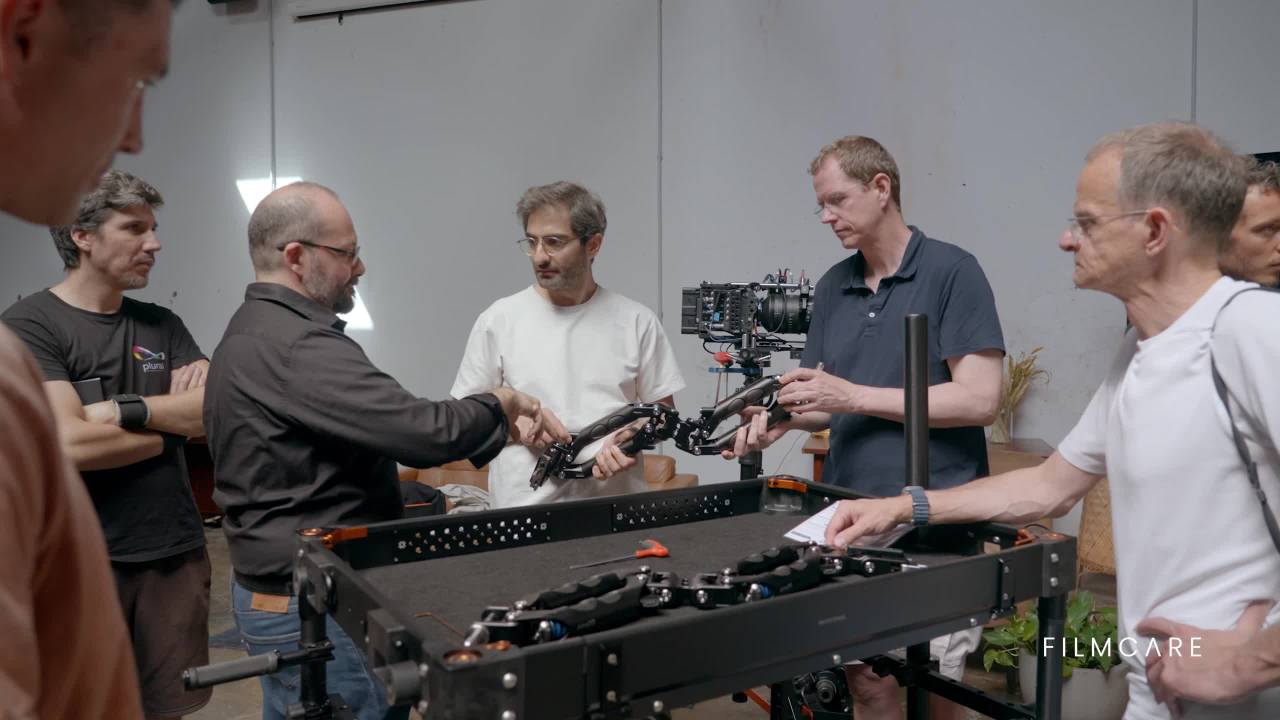
Andrea, CEO of SmartSystem, presents the ArmX1 and the mechanical logic behind its spring-based design.
The session explores compression strategy, load progression, and precise tuning for different payloads.
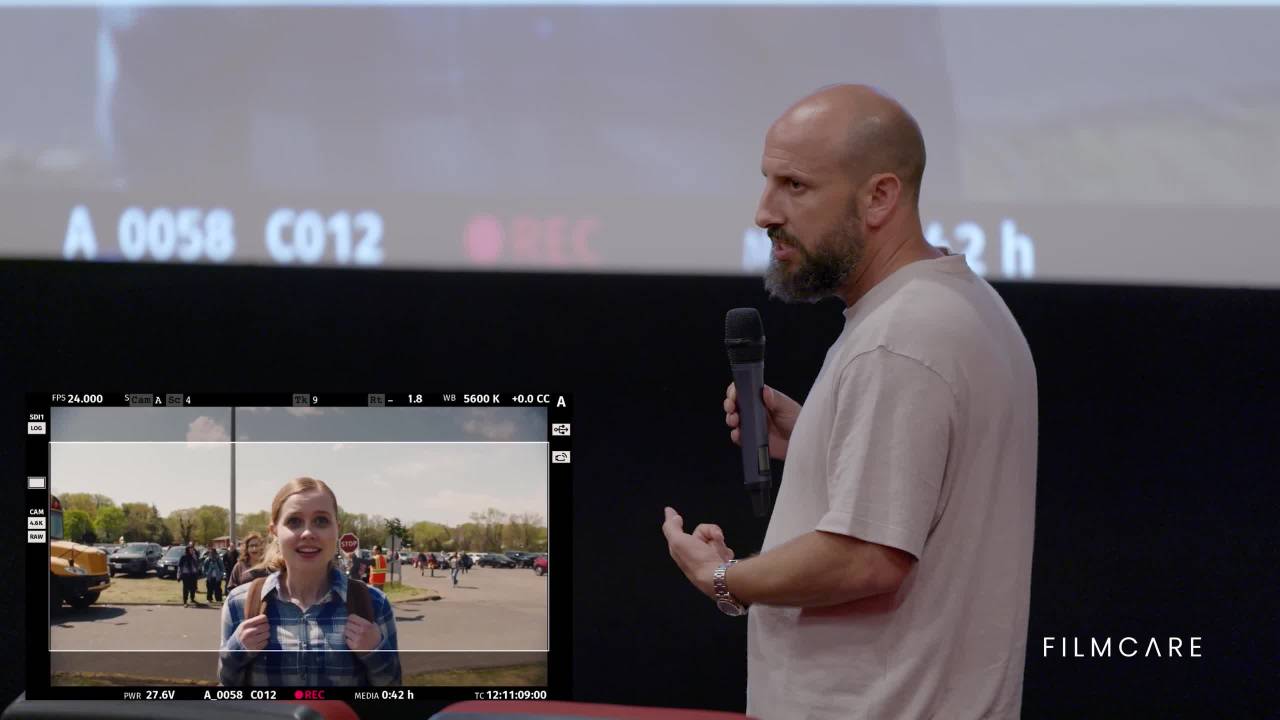
Part 1 - Introduction
Ari Robbins opens with a behind-the-scenes look at Mean Girls (2024), a production that brought him in for two and a half months of rehearsals, rare for a film of this scale.
He shares why early preparation was essential for delivering ambitious Trinity and Steadicam sequences under tight constraints, making this film a powerful case study in choreography, precision, and execution.
Part 2 - Designing the shot, from oners to small pieces
Ari breaks down the opening sequence, showing how ambitious long takes evolved into a hybrid structure of oners and controlled coverage.
He reveals how timing, musical beats, and spatial limitations shaped the final choreography and how protecting rhythm often matters more than protecting ego.
A creative look at how planning and instinct work together on a high-level musical production.
Part 3 - Maneuvering gear and team dynamics
Inside one of the film's most complex sequences, Ari unpacks the reality of executing a cramped-house oner surrounded by dancers, background actors, and constant adaptation.
Weeks of rehearsal met last-minute changes, gear constraints, and evolving choreography. This session highlights how flexibility, negotiation, and composure become as critical as technical mastery.
Execution under pressure, at scale.
Part 4 - Utilizing every aspect to nail the perfect oner
Ari dissects a standout sequence blending handheld, Trinity, and Steadicam into one seamless illusion.
He explains how emotional rhythm dictated gear transitions, how unexpected conditions forced creative pivots, and how subtle adjustments preserved the integrity of the shot.
A focused breakdown of adaptation, precision, and storytelling through movement.
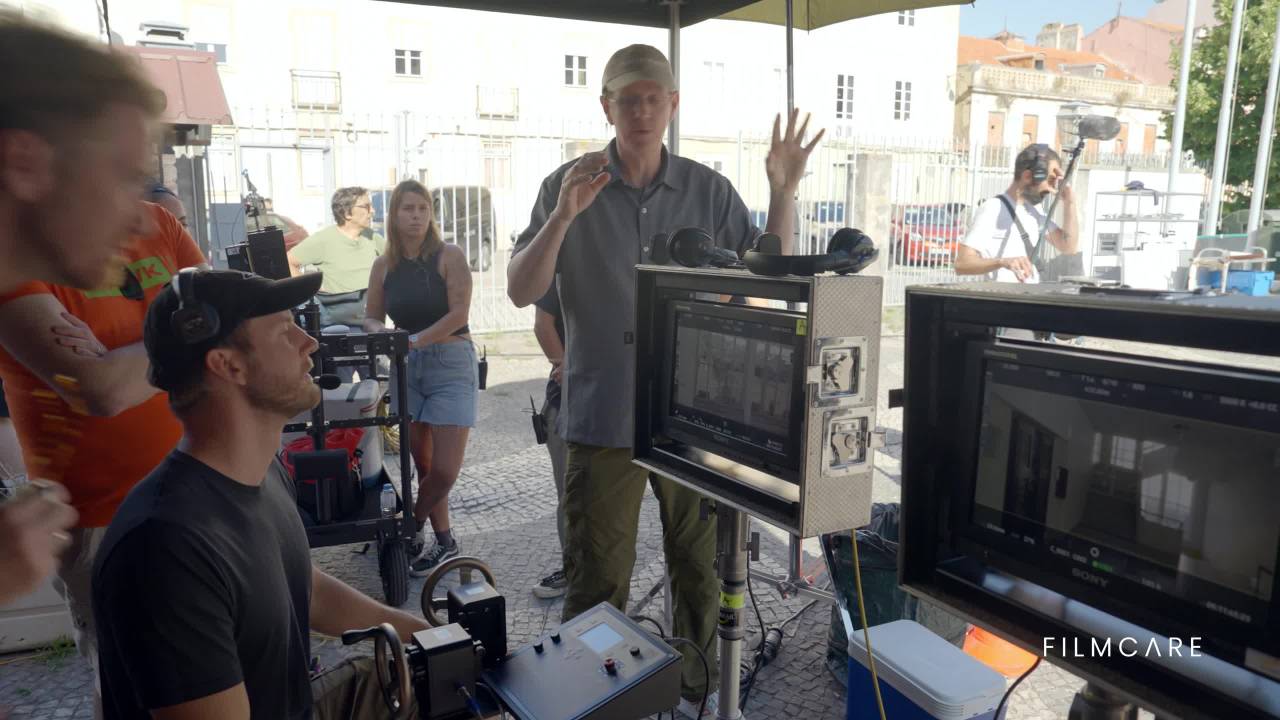
Part 1 - Key discussions before the shoot
Geoff Haley opens the on-set pillar with a focused breakdown of blocking communication, a detail that quietly defines complex shots.
He shares his approach to clear, intention-based cueing that keeps coordination seamless. Precision in language, clarity in movement, control before chaos.
A session on pre-shot discipline that creates freedom once the camera rolls.
Part 2 - Mastering shot blocking & design
Geoff walks through live shot design in real time, balancing director vision, actor placement, and technical constraints on set.
Alongside Director La Sister and DP David Procter, BSC, he shapes blocking, reveals, and camera flow across multiple spaces, demonstrating how the operator guides the conversation without dominating it.
This is set leadership in its most subtle form.
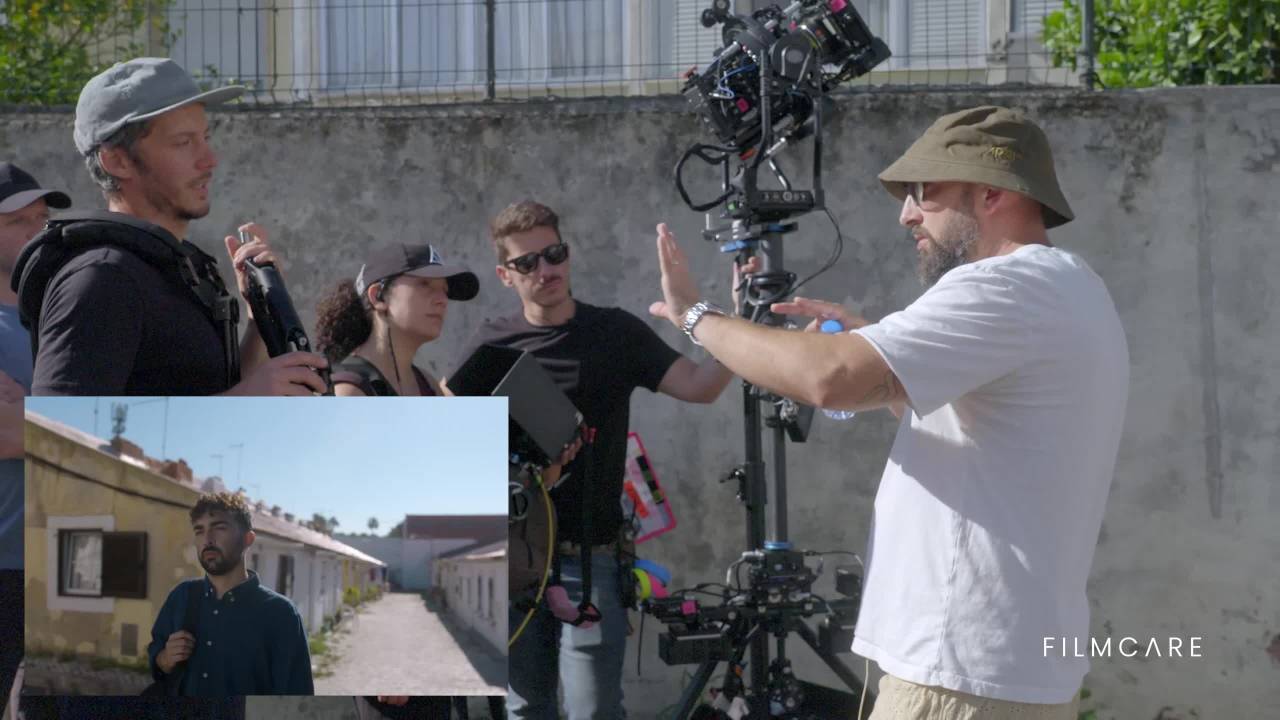
Mastering Shot Blocking - TRINITY2 & Handheld
Ari Robbins leads a live on-set sequence in the streets of Lisbon, that includes Trinity2 and handheld work under real timing.
The session challenges boom movement, tilt control, and seamless transitions between high and low modes. Every adjustment happens in motion, not theory.
This chapter is about physical awareness, instinct, and shaping the shot in real time where small adjustments define the final shot.
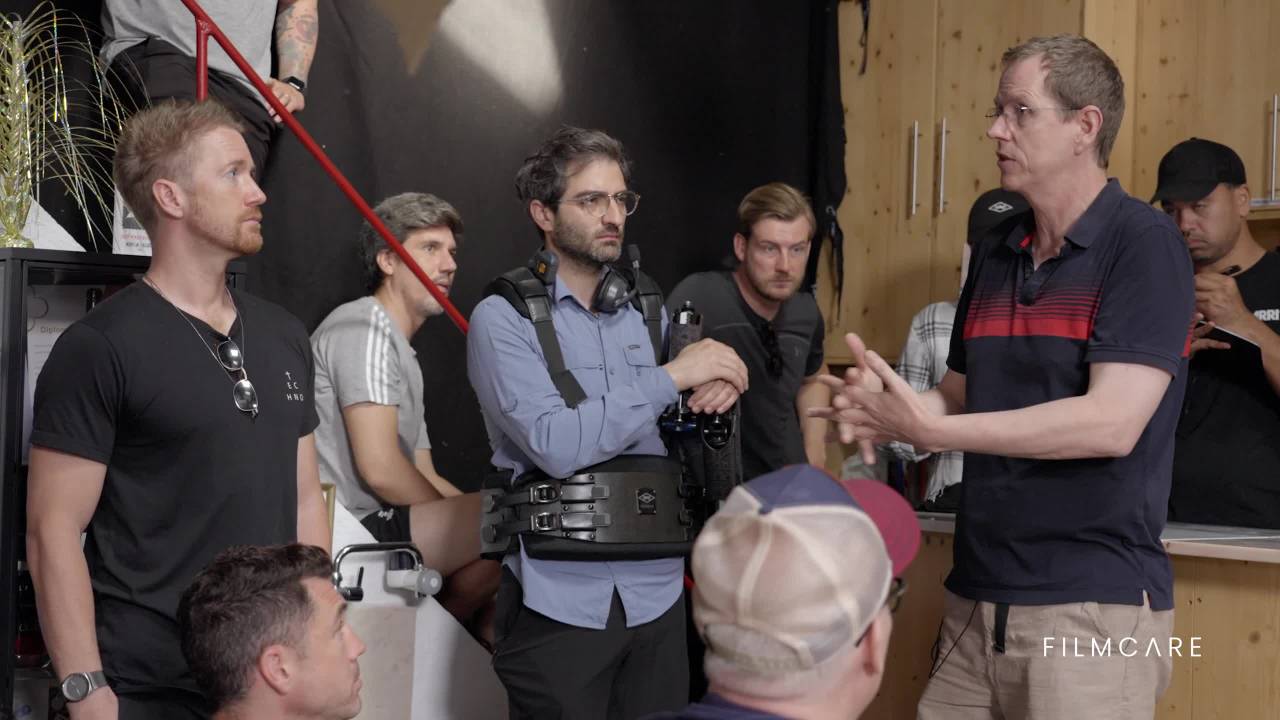
Part 1 - Navigating politics during rehearsals
In this raw rehearsal session, Geoff Haley explores the quiet politics that shape a scene before the camera rolls.
Reading the room, aligning with the DP through silent signals, knowing when to speak and when to step back, this is the invisible leadership that protects a scene's visual integrity.
Including a powerful example from Infinity War, on how and why Geoff was left to run actor rehearsals solo, designing coverage and blocking under pressure.
A chapter on diplomacy, trust, and control without ego.
Part 2 - Tips and tricks for Flying the TRINITY2
Geoff Haley and Fares Corbani break down the Trinity usage approach while blocking an emotional interior sequence.
Moving closer, lower, tighter, adjusting lenses, eye-lines, timing, and body mechanics in real time to protect rhythm and performance.
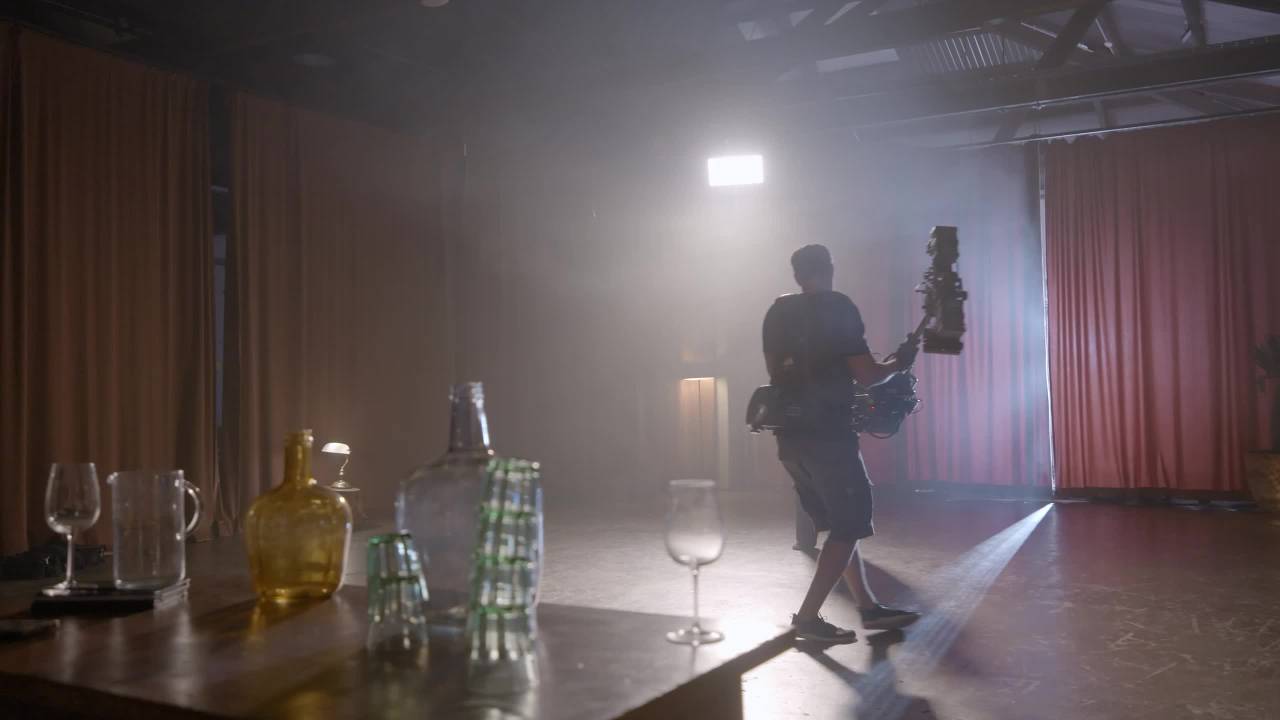
Mastering fluid heads and whip pans
Geoff Haley dives into the operating with a fluid head dialing counterbalance, refining drag, and achieving responsive movement with minimal effort.
From prep at the rental house to stress-testing across axes, he demonstrates how subtle adjustments define the difference. Subtle tracking, sharp whip pans, controlled acceleration...
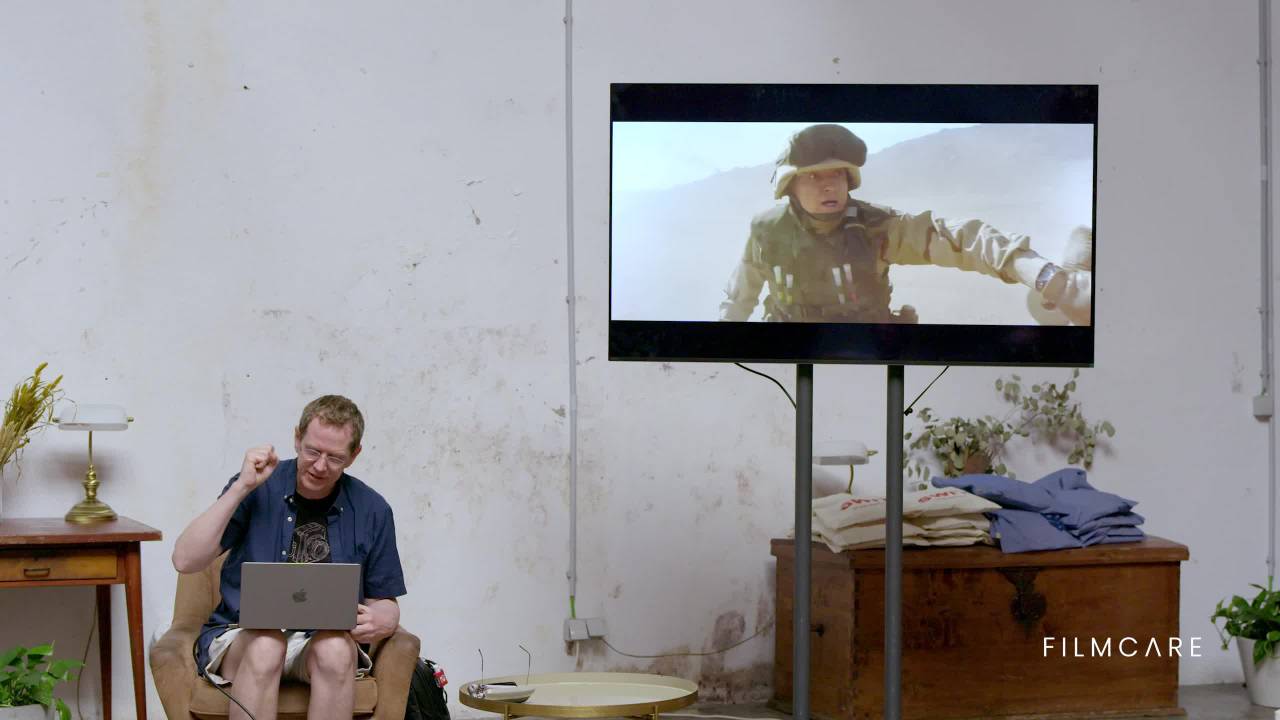
Part 1 - Maneuvring the right tools for handoff shots with Geoff Haley
Geoff Haley challenges the idea that great shots require big budgets.
Using a guerrilla-style war sequence set in Fallujah featuring Tom Holland, he breaks down how a dynamic moment was executed with minimal gear, an Inspire drone, operators in costume, and mid-shot handoffs.
Part 2 - Key Practices for career longevity
Geoff speaks candidly about sustaining a decades-long operating career.
The physical strain, the mental load, the constant pressure and why fitness is not optional, but foundational. Operators are expected to perform like athletes, without athlete-level preparation.
A grounded conversation about boundaries, discipline, and building habits that protect longevity.
Part 3 - Fueling right for the job
Performance on set is directly tied to energy management.
Geoff addresses the impact of caffeine timing, fatigue cycles, and how small daily choices influence focus and stamina throughout long shoot days.
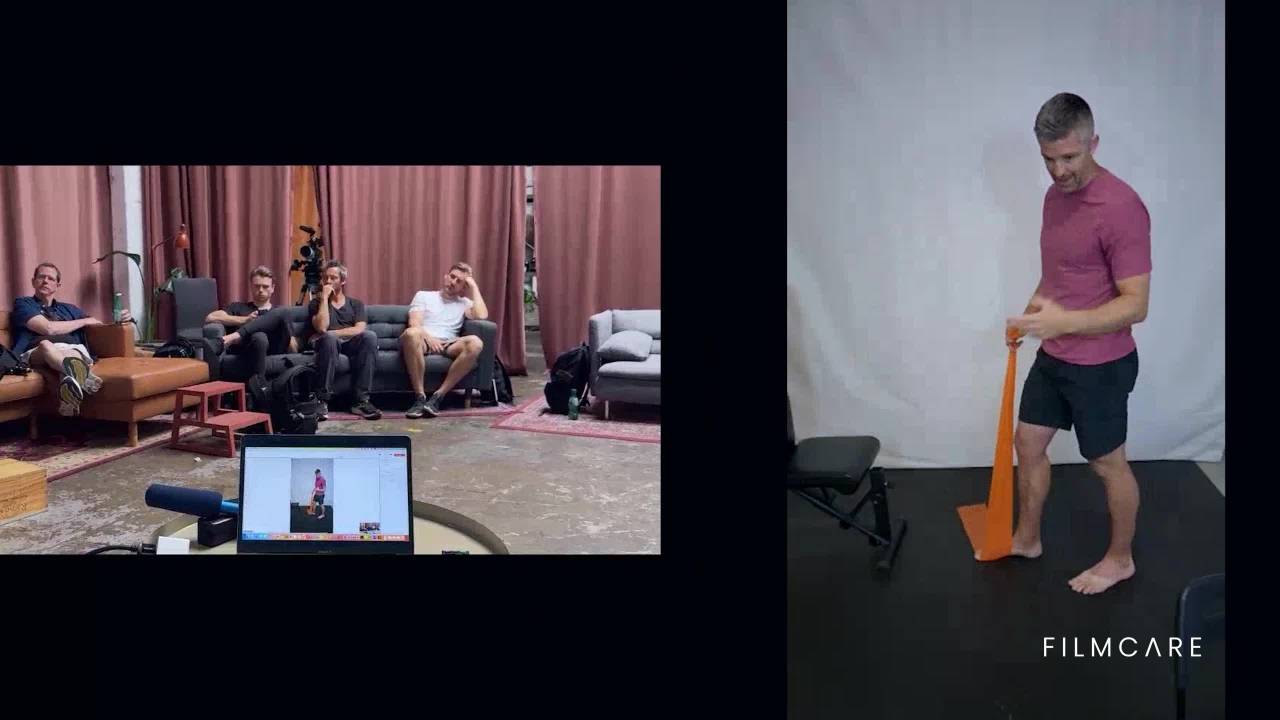
Dr. Caleb Burgess DPT OCS CSCS
Dr. Caleb Burgess, physical therapist and performance coach, delivers a session designed specifically for camera operators working under sustained load.
He addresses back resilience, posterior chain strength, neck stabilization, and mobility strategies to counteract the physical demands of heavy and long camera work days.
Practical routines, travel-friendly exercises and preventative guidance built for longevity for operators who intend to last.
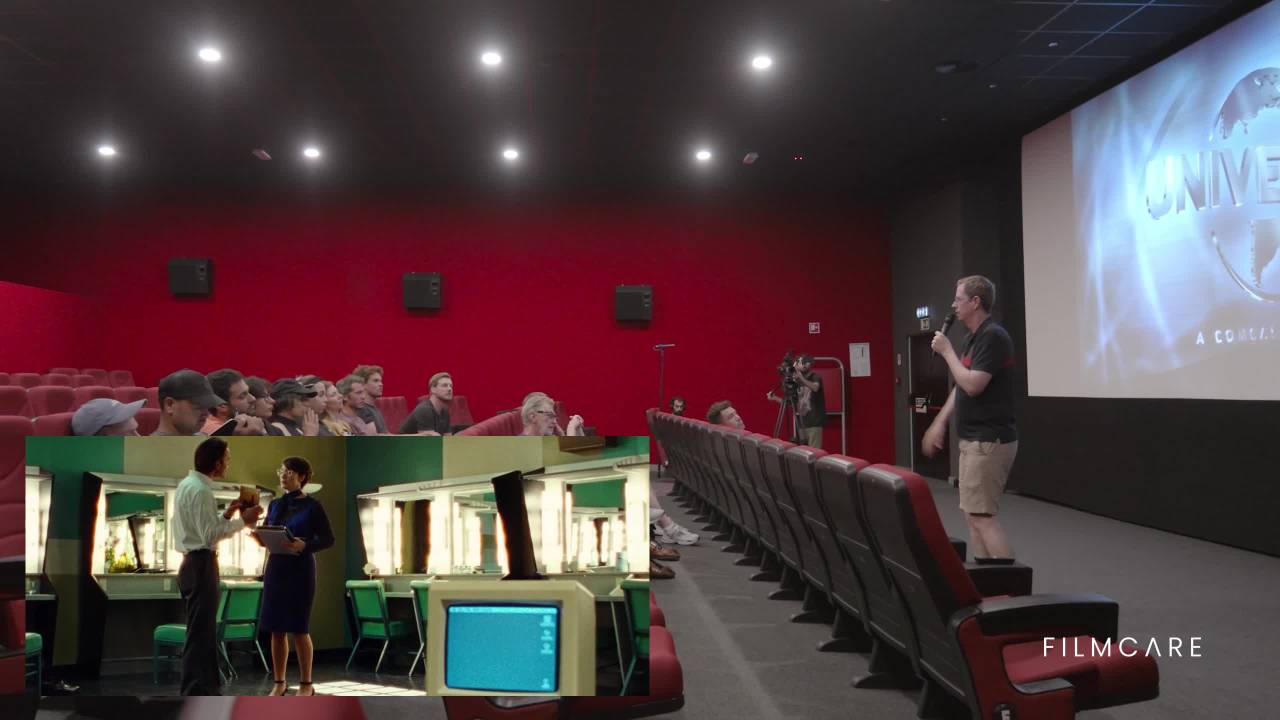
Part 1 - Introduction
Geoff Haley opens a focused deep dive into Steve Jobs (2015), directed by Danny Boyle and written by Aaron Sorkin.
He shares how he was personally brought onto the project, not only for operating. A crucial skill wanted on a film structured as three dialogue-driven theatrical acts.
A case study in precision, preparation, and narrative discipline.
Part 2 - Breaking down Act 1
Geoff unpacks the evolving camera language across the film's three acts.
From the raw handheld energy of 16mm in Act One, to the composed Steadicam and dolly work of Act Two, and the controlled digital glide of Act Three, each shift reflects character evolution and psychological tone.
A Masterclass in movement, where lens choice, format, and blocking serve subtext rather than style.
Still have questions?
Contact our support team →Your Entry to Professional Camera Operating Begins Here
Certified by Filmcare × ARRI Academy.
Featuring exclusive insights from the camera operators behind Joker and La La Land, knowledge you won’t find anywhere else.


